Strengthening Environmental Stewardship

At Zelestra, our approach to environmental stewardship is driven by the ambition to continuously improve and set higher standards. Discover how we have reinforced our environmental efforts, advancing our practices to respond to evolving challenges.
As we approach the end of the year, we would like to share some reflections on the key elements that underpin Zelestra’s environmental approach. This overview highlights the core features of our Environmental Management System and how it supports a structured, consistent and responsible management of environmental aspects across our operations.
At Zelestra, our approach to environmental stewardship is driven by the ambition to continuously improve and set higher standards. This year, we have reinforced our environmental efforts, advancing our practices to respond to evolving challenges and support our clients’ decarbonization objectives within the broader energy transition. We invite you to explore some of the key features of our Environmental Management System, our biodiversity strategy, and our commitment to decarbonization.
Environmental Management System
Zelestra holds ISO 14001 certification, which confirms that the company has implemented a robust Environmental Management System (EMS) aligned with international best practices for managing environmental impacts, ensuring regulatory compliance, and driving continuous improvement across its operations.
The company is committed to the efficient use of natural resources and energy, to reducing emissions and waste, and to systematically monitoring its environmental performance. Zelestra also commits to regular reporting on environmental matters and to engaging and consulting with stakeholders on environmental issues. The whole EMS, including commitments, processes and results, is audited by a third party on yearly basis.
Reporting environmental progress with clarity and consistency
Zelestra is committed to regular and consistent reporting on environmental matters, ensuring that environmental performance and priorities are communicated in a clear and structured manner. Environmental reporting covers the performance of all activities and is supported by the annual consolidation of key operational environmental indicators, such as energy consumption, water use, waste generation, greenhouse gas emissions, and regulatory compliance. Transparency and traceability are ensured through structured internal reporting processes, including periodic internal reporting, and alignment with recognized international reporting frameworks.
In this sense, environmental issues are reported annually through publicly available disclosures, including the annual report containing all the non-financial information. Moreover, environmental reporting is also carried out through additional channels and voluntary initiatives, such the Communication on Progress, (CoP) of the United Nations Global Compact where Zelestra, as participant of the UN Global Compact since 2021, broadens the reach and consistency of environmental disclosures.
As part of the environmental permitting process, all Zelestra’s projects are subject to Environmental Impact Assessments, which are publicly disclosed by the competent authorities. These assessments evaluate the potential environmental impacts of each project and define mandatory mitigation, monitoring and restoration measures, including aspects related to site rehabilitation and environmental restoration at different stages of the project lifecycle.
Keeping environmental communication aligned
This reporting is supported by a structured approach to environmental communication, designed to ensure alignment across functions and regions. In line with our ISO 14001-certified Environmental Management System, environmental management information is communicated both internally and externally through defined channels.

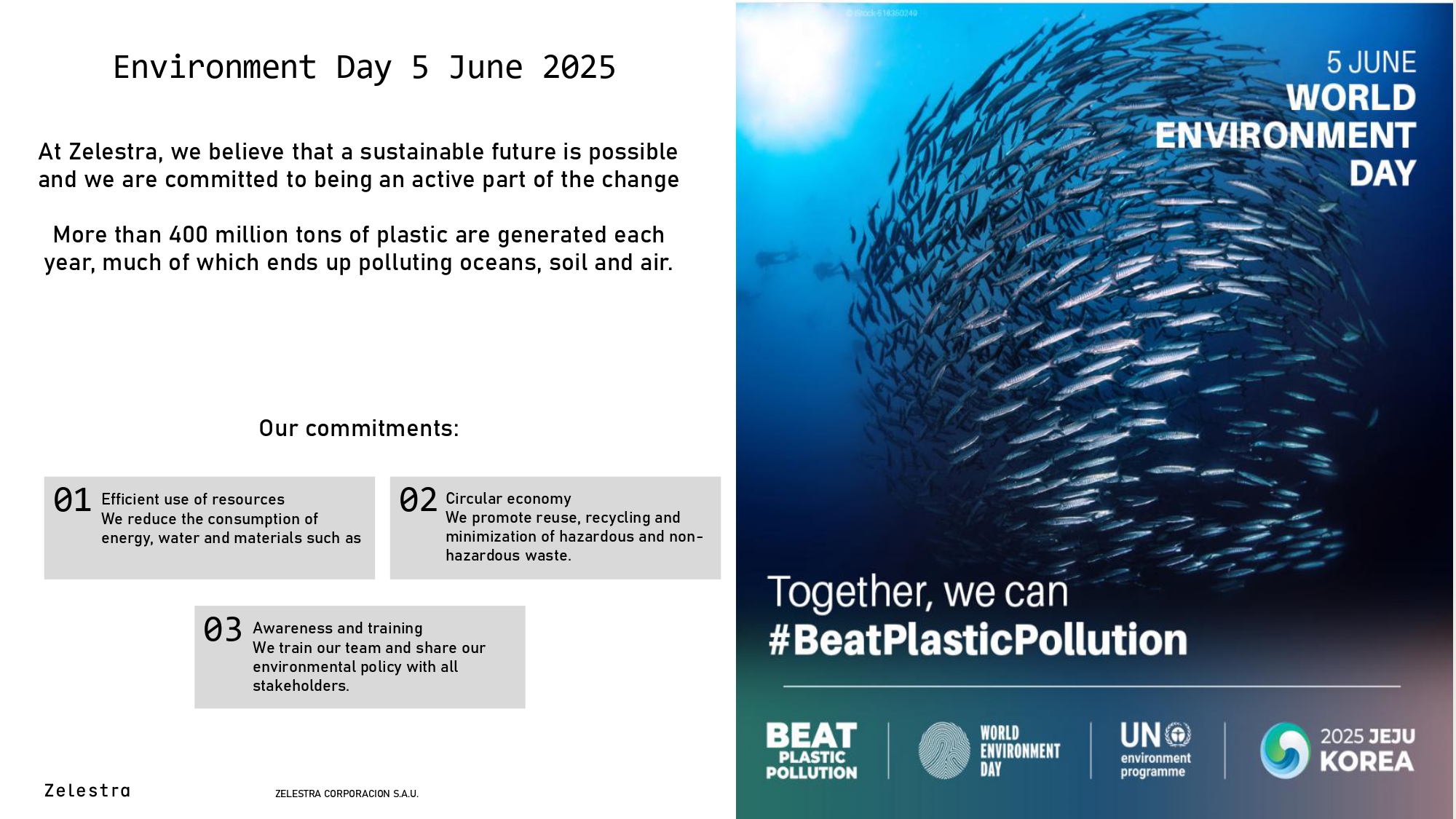
Internally, this includes environmental awareness initiatives across projects under construction as well as those in operation and maintenance, complemented by a monthly internal communication highlighting the most relevant environmental topics and developments, training sessions, and updates related to Environmental Management System. As an example of internal communication, this includes the environmental awareness campaign launched on Environment Day.
Externally, Zelestra communicates environmental policies, key initiatives, and progress through established channels, ensuring clarity and transparency. This includes communication with clients, environmental authorities, local communities, landowners, and strategic partners, supported by a structured process for stakeholder consultation to ensure that expectations and concerns are considered in environmental decision-making. Among the external initiatives carried out, Zelestra highlights the Trail Cruz de Mayo, which takes place in the Valle de Alcudia and Sierra Madrona Natural Park, promoting environmental awareness in a natural setting.
Reinforcing environmental oversight
Apart from other environmental audit programs such as those coming from the ISO14001 certifications, Zelestra’s projects are subject of external environmental audits that serve as an independent mechanism to verify compliance with Equator Principles, but also regulatory compliance and the effectiveness of the Environmental Management System, covering key areas such as environmental impacts, waste management, supplier controls, and the follow-up of corrective actions. The results of these audits provide assurance on environmental performance and are incorporated into structured improvement plans to strengthen compliance and operational performance.
Emergency Preparedness and Response Management
Zelestra’s Emergency Preparedness and Response Program is a core component of the company’s Environmental Management System (EMS), fully aligned with the requirements of the ISO 14001 standard. The program establishes the framework to ensure that potential emergency situations are anticipated, prevented where possible, and effectively managed to minimize environmental impacts.
As part of this program, Zelestra has defined a structured approach to the identification and evaluation of environmental aspects, which sets out how potential incidents, environmental accidents and emergency situations are identified, assessed and managed across the organization. A systematic risk identification and assessment process is applied across all phases of the project lifecycle, addressing scenarios such as fires, spills, electrical failures, extreme weather events, chemical hazards, and community-related emergencies, using structured evaluation matrices that are regularly reviewed and updated.
Zelestra’s facilities and operations that may give rise to potential accidents or emergency situations are specifically addressed through site-specific emergency plans developed for each workplace. These plans identify potential risks and define the actions and measures required in the event of an accident or emergency situation. Corporate-level emergency management guidelines provide a consistent framework for preparedness, response, and recovery, defining operational procedures, roles and responsibilities, alert levels, evacuation routes, personnel protection measures, and coordination protocols with external authorities.
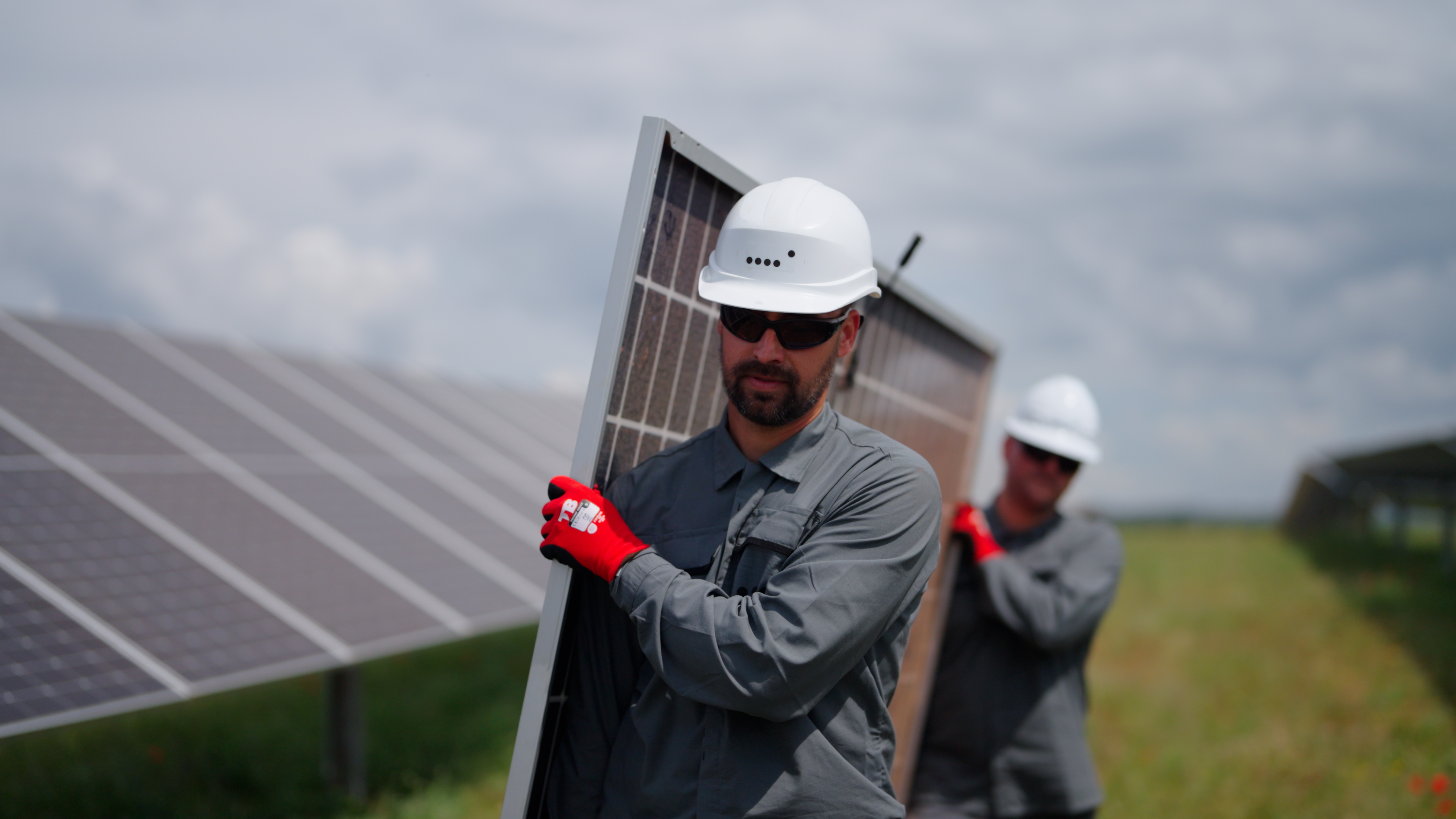
The primary objective of these emergency plans is to identify the processes, resources and tools necessary to determine appropriate response methods to control and prevent emergency situations arising from Zelestra’s activities and processes.
Effective emergency response relies on the timely coordination of affected personnel and available protection resources, whether internal to the facility or external, to ensure their efficient use. Responsibility for emergency preparedness and response lies with the HSE (Health, Safety & Environment) managers and the directors of each project or facility, who coordinate preparedness activities, protocol activation, supervision, and post-incident investigation, including corrective and preventive actions. Depending on the nature of the emergency, this coordination enables rapid evacuation, containment and resolution of the emergency, and limitation of material damage.
This approach is supported through:
- Knowledge of facilities and installations, available protection measures and areas of potential risk.
- The designation of emergency response teams and the training of personnel to act effectively and promptly, including the establishment of specialized intervention brigades.
- Ensuring the reliability of fire prevention and firefighting equipment through appropriate maintenance and conservation, in compliance with applicable standards.
- The designation of local emergency response teams at each project or facility, trained and equipped to act immediately, activate corporate protocols, and coordinate with external emergency services.
Emergency equipment and relevant contact numbers are clearly displayed at each workplace. Clear protocols are in place for the prompt communication of emergency situations to local authorities, fire services, environmental agencies, landowners, local communities, and other relevant stakeholders, in line with regulatory requirements.
To verify the effectiveness and proper functioning of emergency measures, emergency drills are conducted periodically, in accordance with applicable legislation or the specific requirements of the emergency plans for office buildings. These drills cover different alarm scenarios and evacuation procedures, taking into account all work shifts as well as subcontractors or visitors who may be present on site. All employees receive regular emergency response training, and where appropriate, awareness sessions are also conducted with local communities to ensure understanding of emergency procedures.
Emergency plans are reviewed and updated as necessary, particularly when new workplaces are established, following accidents or emergency situations, or after drills and testing exercises.
For the reporting and management of any incident, Zelestra applies a specific Incident Management Procedure, which defines the process for notification, investigation and follow-up. Accessible reporting channels are available for employees, contractors, and other stakeholders, including direct reporting lines, digital reporting tools, and contact with HSE managers. All incidents are logged, assessed, and managed through the EMS to ensure appropriate follow-up and continuous improvement.
Advancing our biodiversity strategy
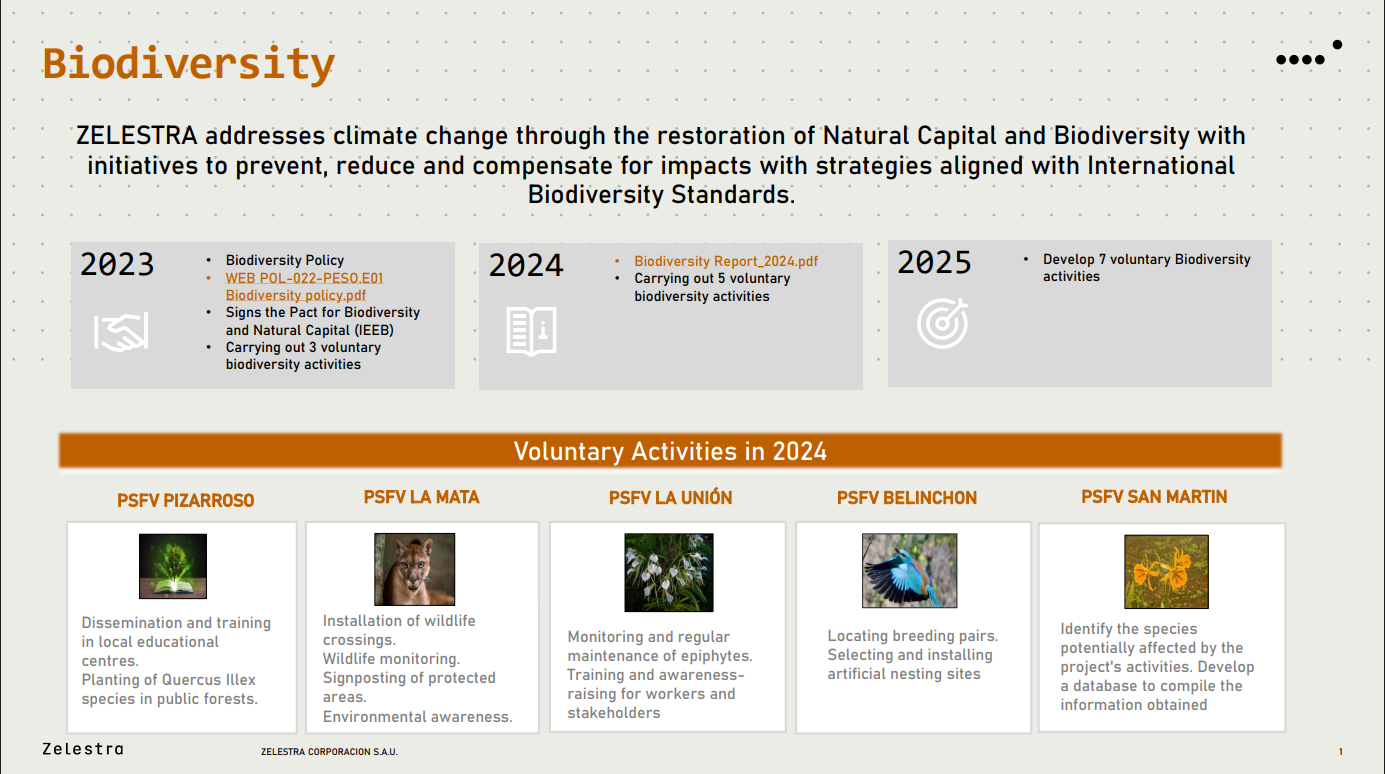
Zelestra addresses the dual urgency of combating climate change and halting biodiversity loss by restoring Natural Capital and Biodiversity through prevention, reduction and compensation initiatives, implemented under strategies aligned with international biodiversity standards. In 2025 Zelestra has progressed in the development of a dedicated biodiversity strategy. Following the analysis of impacts and dependencies, and in line with the main impacts that Zelestra’s activities generate in the natural environments where its projects are developed, four main lines of action have been defined: conservation and enhancement of habitats of interest; protection of wildlife and avifauna; direct protection and management of vegetation; and prevention and mitigation of impacts on the aquatic environment. The strategy is supported by a transformational KPI linked to voluntary biodiversity initiatives.
The whole strategy is grounded in the application of the mitigation hierarchy, the assessment of local biodiversity threats beyond the Company’s direct activities, and a formal commitment to avoid operations in areas of the highest biodiversity value. The approach also promotes engagement with local communities and biodiversity experts, the implementation of site-specific actions with defined timelines, and transparent reporting on biodiversity programs and impacts, reinforcing Zelestra’s commitment to minimizing impacts and supporting positive outcomes for ecosystems.
Turning decarbonization into action
At Zelestra, our purpose is to make decarbonization a reality, and this commitment is embedded in our approach to climate action and emissions management. The company monitors and measures greenhouse gas (GHG) emissions across Scope 1, Scope 2 and relevant Scope 3 categories on an annual basis, in accordance with the GHG Protocol. Emissions data are subject to external verification and are formally registered in Spain’s National Carbon Footprint Registry (Registro de Huella de Carbono, Compensación y Proyectos de Absorción de CO₂) managed by the Ministry for the Ecological Transition.
Zelestra’s climate ambition is aligned with the objectives of the Paris Agreement, and the company has committed to science-based emissions reduction targets, including a 38% reduction in Scope 1 and Scope 2 emissions by 2030, in line with the Science Based Targets initiative (SBTi).
This ambition is supported by a broad set of emissions reduction initiatives, including the deployment of renewable energy, operational efficiency measures, electrification, and the adoption of key mitigation technologies.
Renewable energy deployment is a central pillar of Zelestra’s decarbonisation strategy and includes the development and operation of solar and wind projects, complemented by energy storage solutions and green hydrogen initiatives. These efforts are reinforced through continuous investment in technological innovation and R&D, including the use of advanced data analytics to optimize plant performance and reduce emissions.
In parallel, Zelestra applies a range of operational measures aimed at reducing emissions intensity, including engineering optimization of renewable plants, energy-efficiency improvements across facilities, low-carbon construction practices, or sustainable procurement, with our suppliers’ approval process, that includes ESG criteria. And also, with the inclusion of green procurement clauses in our contracts with main equipment suppliers, and the progressive engagement with them to move forward in alignment towards a more responsible supply chain.
To further strengthen its climate strategy, Zelestra is currently developing a more detailed and up-to-date Climate Transition Plan, which will, in alignment with TCFD and international standards, enhance a better definition of interim milestones, expand coverage across the value chain, and clearly demonstrate how existing and planned initiatives contribute to closing the gap between current emissions performance and long-term decarbonization objectives.
Discover more related initiatives